


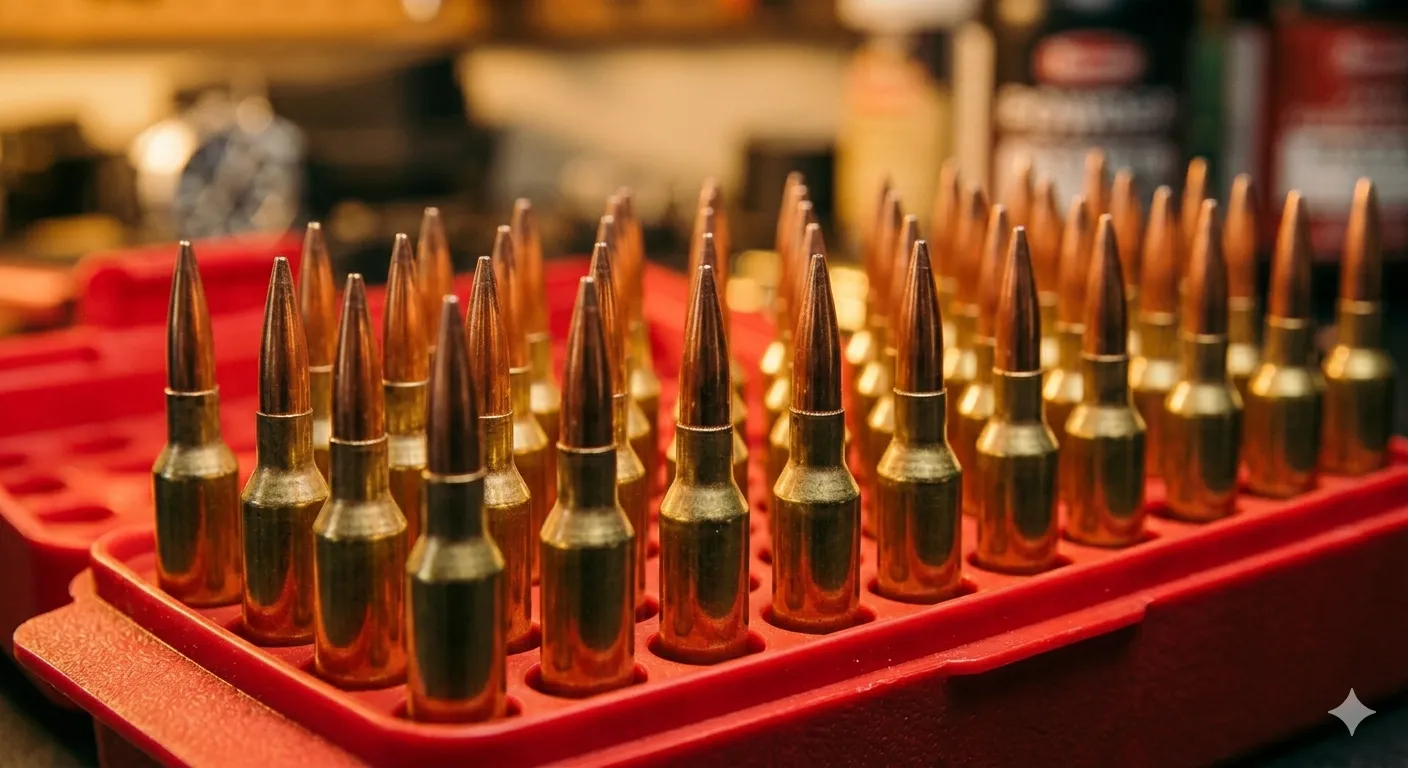
Ninety-seven percent of the top 200 shooters in the Precision Rifle Series handload their own ammunition. That number tells you everything about why serious shooters reload — but it leaves out what beginners actually need to know before buying their first press. This guide covers the real costs, the real risks, and the real process, so you can decide if reloading is right for you.
What Does It Actually Cost to Start Reloading?
The honest answer is $350 to $880 for a functional setup — and the community's honest warning is that you won't spend less money overall, you'll just shoot a lot more.
A budget setup built around a Lee Breech Lock Challenger Kit runs $350–$530 all-in, including dies, calipers, a manual, and your first batch of components. The step-up choice — an RCBS Rock Chucker Supreme Master Kit — costs $670–$880 and is the same press that appears in 28% of PRS top-200 reloaders' setups. Community wisdom: buy once, cry once. Most reloaders still use their Rock Chucker decades later.
Here's what matters: the economics vary dramatically by caliber. Reloading .338 Lapua Magnum drops your cost from roughly $4.00 per round to $1.50 — a $500 equipment investment breaks even in as few as 160 rounds. Reloading 9mm saves you about $0.07 per round; break-even takes 5,000 to 10,000 rounds. The case for reloading is strongest for precision rifle calibers, weakest for bulk handgun ammo.
Want to run the numbers for your specific caliber and shooting volume? The COR app calculates your exact cost per round and break-even point so you can make the decision with real data.
Is Reloading Dangerous?
Reloading is safe when done carefully, and statistically, the reloading community's long-term record supports that. But it is not zero-risk — and no honest guide pretends otherwise.
The most catastrophic risk is using the wrong powder. Using fast-burning pistol powder in a rifle case can generate pressures that destroy the firearm. Prevention is simple: keep only one powder canister on the bench at a time, store all powder in original labeled containers, and never use unlabeled powder, regardless of what someone swears it is.
Double charges — putting two powder charges into one case — are the most common dangerous error and primarily affect pistol reloading. Rifle cases using slow-burning powder physically cannot hold a double charge. With pistol cases, load every case in a block and visually inspect each one under bright light before seating a bullet. That one step has saved experienced reloaders from serious mistakes for decades.
But there's a catch most beginners don't expect: the fear of getting it wrong is actually a good sign. As one AccurateShooter forum member told a nervous newcomer: "You are nervous because you are intelligent enough to realize that doing things wrong could be dangerous. I think that is a very good sign." Nervous beginners follow the manual. Complacent ones skip steps.
What Does the Reloading Process Actually Look Like?
Reloading a rifle cartridge breaks down into 12 steps, but the core sequence is straightforward: clean your brass, resize and deprime it, trim cases to length, seat a new primer, charge with powder, and seat the bullet.
The most critical step is powder charging. Consult a published manual — the Lyman 51st Reloading Handbook is the near-universal beginner recommendation — for the correct powder type and charge weight. Start at the listed starting load, never the maximum. Work up in small increments, watching for pressure signs: flattened primers, sticky bolt lift, ejector marks on the brass. Those are your warning system.
The second thing every experienced reloader wishes beginners knew: write everything down from the first round. Record your powder type, charge weight, bullet, primer, brass headstamp, and overall length. One forum veteran summed it up: "Write IT ALL DOWN. A log book is nice, but a piece of paper will do." Your data is what separates a repeatable load from a lucky one.
Reloading rewards patience, discipline, and curiosity — and it gives you a level of control over your ammunition that factory rounds simply cannot match. Start with a single-stage press, one caliber, and one reloading manual. Get your first 100 rounds right before adding complexity. And before you invest a dollar, use the COR Cost of Reloading calculator to find out exactly when — and whether — reloading makes financial sense for how you shoot.